

Blog · Taxes
What’s in Your Tax-Free Retirement Bucket?
If you’re like most high earners, your retirement savings strategy probably looks something like this: max out the 401(k), maybe throw money into an IRA, and then let the market do its thing. On paper, that seems fine. But here’s the problem: tax-deferred doesn’t mean tax-free.
The Tax-Deferred Trap
Every dollar you put into a 401(k) or traditional IRA has a silent partner: the IRS. Sure, you save on taxes today, but when it’s time to retire, Uncle Sam will want his cut. And no one knows what tax rates will look like in 10, 20, or 30 years. If rates go up, that “nest egg” may not stretch as far as you’d hoped.
Put simply: if all your money is in tax-deferred accounts, you’re rolling the dice on future tax policy.
The Roth IRA Roadblock
A Roth IRA solves that issue—tax-free growth, tax-free withdrawals. But for many high-income professionals, there’s a catch: you make too much to qualify for direct contributions. Couples earning more than around $240K? You’re phased out.
Yes, there’s the backdoor Roth option—contribute to a traditional IRA, then convert to Roth. It works, but the contribution limit is still tiny: $7,000–$8,000 a year. For people trying to build a serious retirement income stream, that’s barely enough to move the needle.
Why a Tax-Free Bucket Matters
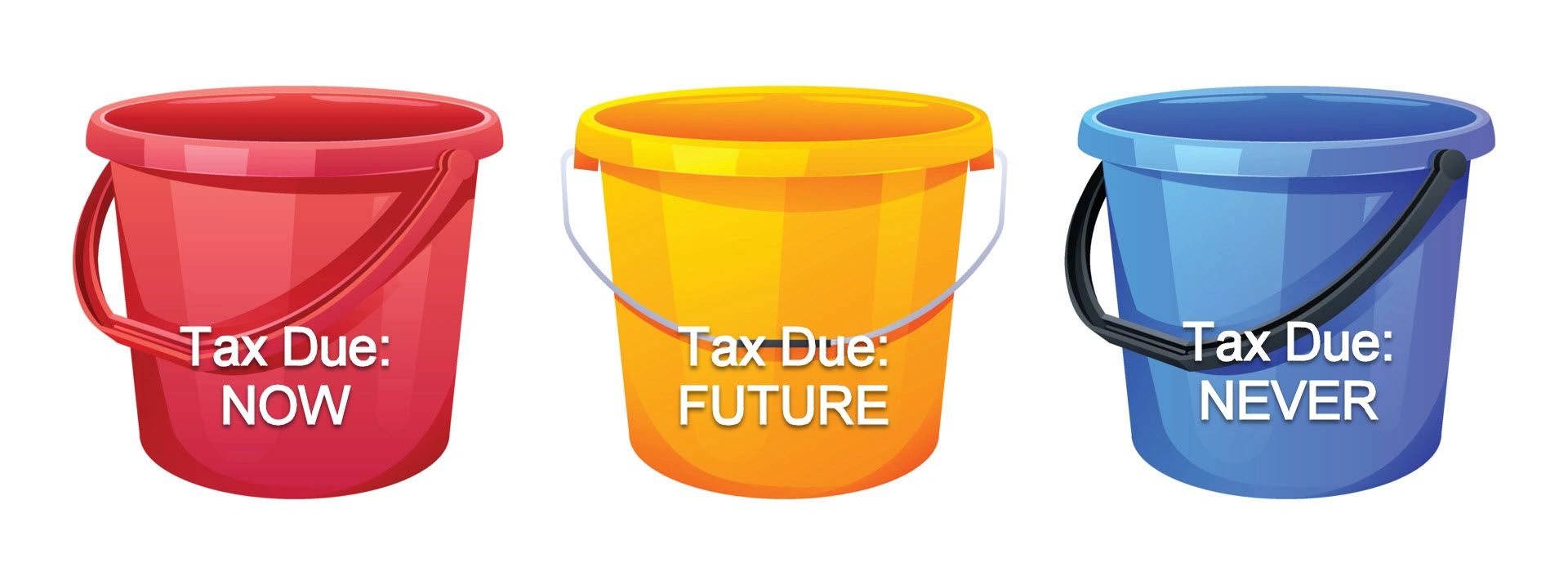
The best retirement plans don’t rely on one type of account, but multiple “buckets”:
-
Taxable bucket: brokerage accounts, investments you can sell anytime
-
Tax-deferred bucket: 401(k), traditional IRA
-
Tax-free bucket: Roth IRA, Muni Bonds, and CVLI (cash value life insurance)
That last one—the tax-free bucket—is the most powerful. It gives you flexibility. You can control how much taxable income you show in retirement, hedge against rising tax rates, and build reliable, spendable income you won’t lose sleep over.
Filling the Gap
So if Roth IRAs are off-limits or too small to matter, where do you turn? That’s where cash value life insurance (CVLI), particularly Indexed Universal Life (IUL), comes in. Think of it as “Roth without the restrictions.” No income limits. No contribution caps. Plus, your money grows tax-deferred, can be accessed tax-free, and it’s protected from market downturns.
IUL isn’t the only option, but the principle stands: you can’t afford to build your entire retirement on tax-deferred accounts. A smart strategy makes sure you have a solid tax-free bucket alongside everything else.
Key Takeaways
-
401(k)s and IRAs are tax-deferred, not tax-free—future tax hikes are a real risk.
-
Roth IRAs are great, but contribution limits and income caps make them impractical for high earners (even with a backdoor Roth).
-
Adding a tax-free bucket with Roths and CVLI gives you flexibility and control in retirement.
-
IUL can be the “Roth without limits” that high-income professionals need.
Disclaimer: This article is for educational purposes only and should not be taken as tax or financial advice. For personalized guidance, consult a qualified tax professional, as your specific situation (e.g., existing IRA balances, income, or tax status) can affect the strategy’s effectiveness.