

Blog · Long-term care
Long-Term Care (LTC) Insurance – How Do the Plans Differ?
This article will give you some basic insight as to how insurance companies pay out benefits, and how that may affect your buying decision. In some cases, people are willing to offset the future risks to their retirement plan by reducing that risk with insurance. In other cases, the projected cost and risk is so likely that the dual plan example below might make sense.
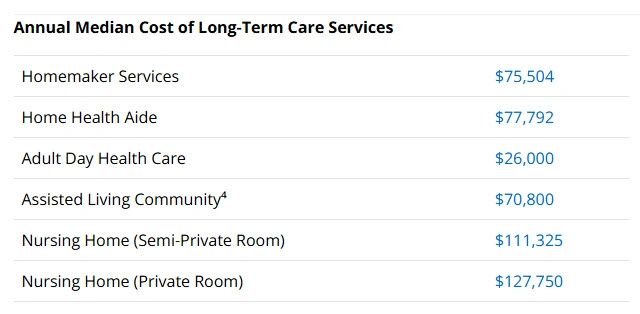
In general, if you have $1 million or more in retirement assets, you should consider putting a hedge around them with some LTC insurance. It’s easy to imagine spending at least $100,000 on long-term care for 1-2 years at home. Take that same $100,000 carveout and buy this insurance to get $300,000 for that care. Your family history may lead you to consider more coverage, enabling your spouse or children choices for your care.
IMPORTANT: Existing health issues may disqualify you from this type of insurance.
For educational purposes, we will examine the option of buying two hybrid type Long-Term Care insurance (LTCi) products, both with fixed premiums and guaranteed benefits, and both with payout options to beneficiaries if the policy is not fully used in the life of the insured (beneficiary payout). We’ll look at Lincoln Financial’s MoneyGuard (based on an Index Universal Life policy) and OneAmerica’s AssetCare (based on a Whole Life (policy).
This strategic approach aims at tackling the complexities of long-term care (LTC) needs, especially for scenarios like Alzheimer’s that can stretch over 8 years or more (the average). By leveraging the strengths of both a hybrid indemnity model (MoneyGuard) and a hybrid reimbursement model with lifetime potential (AssetCare), you’re aiming to cover a broader spectrum of care costs—flexible early-stage expenses and facility-based later-stage needs—while addressing the gaps each product has alone. Let’s break this down and explore why this pairing makes sense, how it works, and some practical considerations.
Why Pair Lincoln’s MoneyGuard and OneAmerica’s AssetCare with lifetime rider?
MoneyGuard operates as an indemnity contract, paying a fixed monthly benefit directly to you (or your designee) once you qualify, regardless of actual expenses, while AssetCare uses a reimbursement model, covering only documented LTC costs up to a limit. This difference is huge for care planning, especially over an 8+ year Alzheimer’s timeline. Here’s how they complement each other:
-
MoneyGuard (Indemnity):
-
Strength: Flexibility. You get a cash payout (e.g., $10,000/month) to use however you see fit—paying a relative to fly in, hiring unlicensed caregivers, covering home modifications, or even non-care expenses like utilities. These costs often arise in early long-term care scenarios when you’re still at home and don’t qualify for reimbursement under stricter policies.
-
Limit: The LTC benefit pool (e.g., $300,000 with a $100,000 death benefit) runs out after a fixed period—say, 2.5-5 years with inflation and the extension rider. For 8 years, it’s likely depleted by year 5 or 6, leaving later facility care uncovered.
-
Lose It?: A death benefit exists if LTC isn’t fully used.
-
-
AssetCare with Continuation of Benefits (COB) Rider (Reimbursement):
-
Strength: Lifetime coverage. The base LTC pool (e.g., $300,000 for a $100,000 death benefit) covers initial reimbursed costs, and the COB (lifetime) rider kicks in afterward, paying indefinitely for qualifying expenses like nursing homes or memory care facilities—perfect for Alzheimer’s late stages, which often involve 24/7 professional care costing $100,000-$150,000/year in 2025. The
-
Limit: Only reimburses documented LTC expenses (e.g., licensed providers, facilities), excluding informal care or travel costs your relative example highlights. COB rider adds costs, but with the potential for lifetime benefits.
-
Lose it?: Death benefit if LTC isn’t needed, and premiums are guaranteed.
-
-
Pairing Logic: Use AssetCare for any reimbursable expenses and MoneyGuard’s indemnity cash for unreimbursed costs. Don’t worry about draining AssetCare’s pool if you have the lifetime rider. As care shifts to facilities in later years, you can further rely on AssetCare’s reimbursements and use any of the banked indemnity money you didn’t spend earlier when drawing the full benefit but spending less. This stretches both policies’ utility, enabling optimal care choices for the insured.
How It Could Work: A Hypothetical Example (not a quote)
Let’s model this for a 55-year-old planning for care starting at age 80, assuming an 8-year need:
-
MoneyGuard: $100,000 single premium buys a $100,000 death benefit and $300,000 LTC pool, with a $10,000/month benefit and 5% inflation. By age 80, the monthly benefit grows to ~$26,500, and the pool to ~$795,000. You use this for years 1-3 (home care, family travel, etc.), drawing $26,500/month = $318,000/year. That’s ~2.5 years ($795,000 ÷ $318,000), leaving $0 by year 3.
-
AssetCare with COB: $100,000 single premium buys a $100,000 death benefit and $300,000 LTC pool (3x death benefit), with a $10,000/month benefit and 5% inflation. By age 80, it’s $26,500/month and $795,000 total. Use this for any reimbursable expenses year 4, then use it for facility care ($150,000/year = $12,500/month reimbursed). The pool lasts ~5 years ($795,000 ÷ $150,000), covering years 4-8, and the COB rider picks up beyond year 8 if needed.
-
Timeline:
-
Years 1-3: MoneyGuard pays $26,500/month for flexible costs (total ~$954,000 over 3 years, exceeding its pool, so it stops).
-
Years 4-8: AssetCare reimburses $150,000/year (~$750,000 total), then COB covers year 9+ indefinitely.
-
-
Total Cost: $200,000 upfront ($100,000 each), covering 8+ years with both flexibility and lifetime security.
Advantages of This Pairing
-
Covers All Phases: MoneyGuard handles early, informal care (e.g., flying in a relative, which reimbursement policies reject), while AssetCare’s COB ensures late-stage facility costs don’t bankrupt you.
-
Maximizes Funds: Using indemnity first preserves AssetCare’s pool for when reimbursement is practical, avoiding overlap or waste.
-
Guaranteed Premiums: Both offer single-premium or limited-pay hybrids, locking in costs with no future hikes.
-
Return of Premium - Death Benefit Safety Net: If care isn’t needed, you get $100,000+ back by way of withdrawal or loan, or as death benefit payout to heirs.
Challenges and Trade-Offs
-
Cost: $200,000 upfront (or more for larger pools) is steep, requiring significant liquid assets. Splitting it over 5-10 years might ease this but still demands high net worth.
-
Availability: AssetCare isn’t sold in New York due to regulatory barriers, so this pairing only works outside New York. In New York, you’d need a substitute like Nationwide’s CareMatters with an extended rider, though it’s not truly lifetime.
-
Drawing Benefits: Benefit eligibility is the same for both, so be sure to use AssetCare for all reimbursable expenses while also tapping the full benefit of MoneyGuard when, any excess indemnity benefit can be banked for later. The AssetCare plan will cover some home modification costs.
-
Reimbursement? Cancelling and cashing out of these policies is a possibility, possibly netting out your premium payments, minus rider costs. If base benefits are minimally used, a remaining death benefit will payout tax free to heirs.
Optimizing for Alzheimer’s
Early Alzheimer’s often involves home-based, informal care (e.g., family support, travel costs) that indemnity suits, while late stages shift to facilities that reimbursement covers. Pairing these leverages that split:
-
Years 1-4: MoneyGuard’s cash pays for home aides ($5,000/month), relative travel ($2,000/trip), or respite care, stretching its pool longer if you don’t max it out.
-
Years 5-8+: AssetCare may reimburse $12,000-$15,000/month for memory care, with COB rider ensuring lifetime of benefits.
This beats relying on MoneyGuard alone (which taps out by year 5-6) or AssetCare alone (which misses early flexible costs). It’s also more robust than traditional LTC like National Guardian’s EssentialLTC, which lacks indemnity flexibility and risks premium hikes unless single-paid.
Final Thoughts
We know long-term care is expensive. Having LTC insurance is one way to protect your retirement assets from being drained when you or your spouse needs care.
Not everyone is eligible for these types of insurance contracts. As you age, you are more likely to encounter disqualifying health situations, and of course, rising costs.
If you are over 45, investigate LTC insurance enabling you reduce this risk to your retirement plan. Schedule a free consultation with me: www.calendly.com/southard/60min.